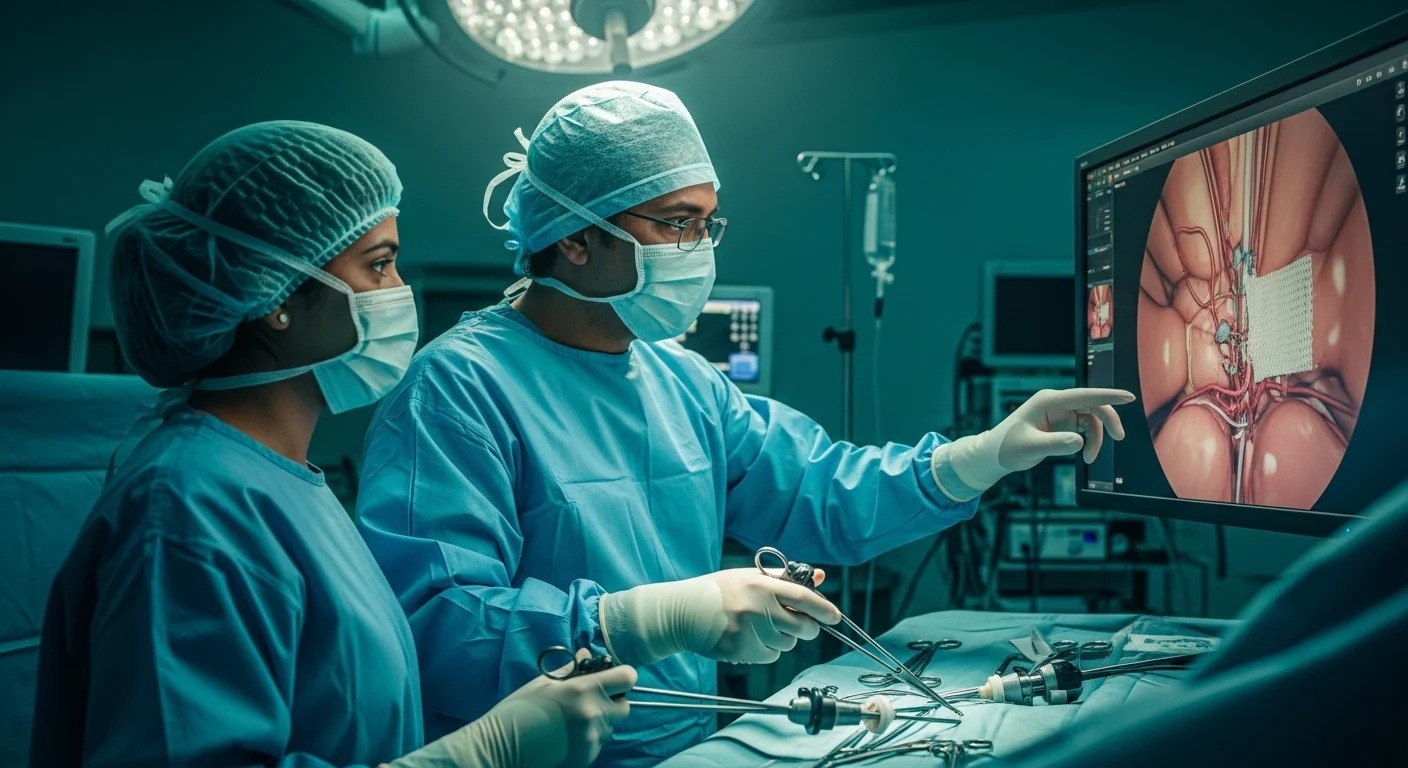
Abdominal wall reconstruction is a surgical procedure performed to repair weak, damaged, or separated muscles of the abdomen. It is commonly done to treat large or complex hernias, restore muscle strength, and improve the appearance and function of the abdominal wall.
This guide explains the condition and treatment in simple language for patients and families.
What Is the Abdominal Wall?
The abdominal wall is made up of:
- Skin
- Fat
- Muscles
- Connective tissues (fascia)
These layers protect internal organs like the intestines and stomach and help with posture, breathing, and movement. When the abdominal wall becomes weak or damaged, organs may push through, forming a hernia.
Why Is Abdominal Wall Reconstruction Needed?
This surgery may be recommended for:
- Large or recurrent ventral hernias
- Incisional hernias (after previous abdominal surgery)
- Trauma-related abdominal wall damage
- Congenital abdominal wall defects
- Severe muscle separation (diastasis recti)
In complex cases, standard hernia repair may not be enough, and reconstruction is required.
What Happens in Abdominal Wall Reconstruction?
The goal of surgery is to close the hernia defect, restore muscle strength, reinforce the abdominal wall, and prevent recurrence. Surgeons may use:
- Sutures (Stitches) – To close small defects.
- Surgical Mesh – A medical-grade material placed to strengthen and support the weakened area.
- Component Separation Technique – A specialized method where abdominal muscles are carefully separated and repositioned to close large defects without tension.
Types of Surgical Approaches
- Open Surgery – Larger incision used for complex or very large hernias.
- Laparoscopic Surgery – Small incisions with faster recovery and less postoperative pain.
- Robotic-Assisted Surgery – Advanced minimally invasive technique with greater precision and flexibility.
Your surgeon will decide the best approach based on your condition.
Benefits of Abdominal Wall Reconstruction
- Reduces hernia recurrence
- Restores abdominal strength
- Improves posture and mobility
- Reduces discomfort or pain
- Improves cosmetic appearance
Risks and Possible Complications
As with any surgery, risks may include:
- Infection
- Bleeding
- Fluid collection (seroma)
- Mesh-related complications
- Recurrence of hernia
- Blood clots
Proper surgical planning and follow-up care reduce these risks.
Preparation Before Surgery
Your doctor may advise:
- Weight management
- Control of diabetes and blood pressure
- Stopping smoking
- Nutritional improvement
- Pre-surgical medical evaluation
Good preparation improves healing and reduces complications.
Recovery After Surgery
Recovery depends on the size of the repair and surgical method. General recovery guidelines:
- Hospital stay: 1–5 days (depending on complexity)
- Gradual return to normal activities
- Avoid heavy lifting for 4–8 weeks
- Wear abdominal support binder if recommended
- Regular follow-up visits
Full recovery may take several weeks to months.
When to Contact Your Doctor
Seek medical attention if you experience:
- Fever
- Increasing redness or swelling at the surgical site
- Severe pain
- Pus or unusual discharge
- Sudden swelling in the abdomen
Living After Abdominal Wall Reconstruction
To maintain long-term results:
- Maintain a healthy weight
- Avoid heavy lifting without support
- Treat chronic cough or constipation
- Follow doctor's exercise recommendations
Strengthening core muscles gradually under guidance can help maintain repair strength.