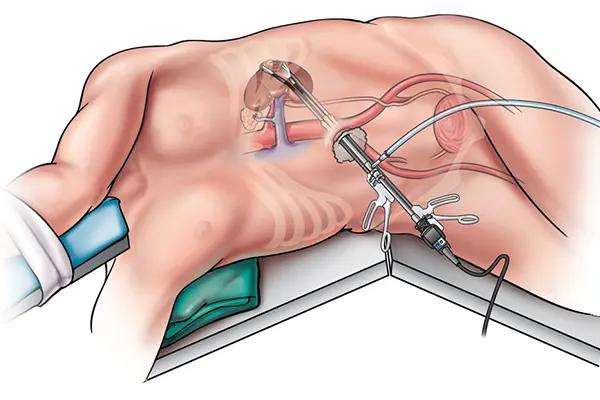
Laparoscopic nephrectomy is a minimally invasive surgical procedure to remove a kidney using small incisions and a special camera called a laparoscope. Compared to traditional open surgery, it usually causes less pain, smaller scars, and faster recovery.
What Is a Nephrectomy?
A nephrectomy is the surgical removal of a kidney. Humans have two kidneys, located on either side of the spine in the lower back. Kidneys help:
- Filter waste from the blood
- Produce urine
- Control blood pressure
- Maintain fluid and electrolyte balance
A person can live a healthy life with one functioning kidney.
What Is Laparoscopic Surgery?
Laparoscopic surgery is also called keyhole surgery. Instead of one large cut, the surgeon makes 3–5 small incisions. A thin tube with a camera (laparoscope) is inserted to view the inside of the body on a screen, and special instruments are used to remove the kidney.
Why Is Laparoscopic Nephrectomy Performed?
This procedure may be recommended for:
- Kidney cancer
- Severe kidney damage or non-functioning kidney
- Recurrent kidney infections
- Large kidney stones causing permanent damage
- Congenital kidney abnormalities
- Kidney donation (living donor nephrectomy)
Your doctor will explain the specific reason in your case.
Types of Nephrectomy
- Simple Nephrectomy – Removal of the entire kidney
- Radical Nephrectomy – Removal of the kidney along with surrounding tissue and sometimes lymph nodes (often for cancer)
- Partial Nephrectomy – Removal of only the diseased part of the kidney
How Is Laparoscopic Nephrectomy Performed?
The procedure usually follows these steps:
- General anesthesia is given (you will be asleep)
- Small incisions are made in the abdomen
- Carbon dioxide gas is used to inflate the abdomen for better visibility
- A laparoscope and surgical instruments are inserted
- The kidney is carefully separated from surrounding tissues
- The kidney is removed through a slightly larger incision
- Incisions are closed with stitches or surgical glue
The surgery typically takes 2–4 hours, depending on the complexity.
Benefits of Laparoscopic Nephrectomy
Compared to open surgery, it offers:
- Smaller scars
- Less postoperative pain
- Shorter hospital stay (usually 2–4 days)
- Faster recovery
- Lower risk of infection
- Earlier return to daily activities
Risks and Possible Complications
Although generally safe, possible risks include:
- Bleeding
- Infection
- Injury to nearby organs
- Blood clots
- Reaction to anesthesia
- Rarely, need to convert to open surgery
Your surgical team takes precautions to minimize these risks.
Recovery After Surgery
- Mild pain and discomfort are common for a few days
- Walking is encouraged early to prevent blood clots
- Normal diet is gradually resumed
- Avoid heavy lifting for 4–6 weeks
- Most patients return to normal activities within 2–6 weeks
- Follow-up appointments are important to monitor healing and kidney function
Living with One Kidney
If one kidney is removed, the remaining kidney usually adapts and performs necessary functions.
To maintain kidney health:
- Stay hydrated
- Maintain healthy blood pressure
- Control diabetes if present
- Avoid excessive use of painkillers
- Have regular medical check-ups
When to Consult a Doctor
Seek medical attention if you experience:
- Fever
- Increasing pain or redness at incision site
- Heavy bleeding
- Difficulty urinating
- Severe abdominal pain