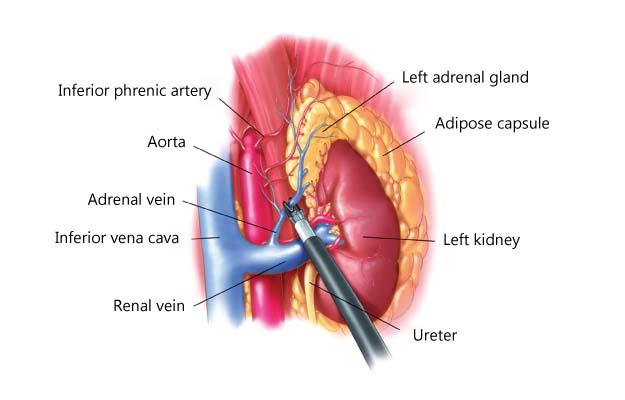
Laparoscopic Adrenalectomy, commonly known as Lap Adrenalectomy, is a minimally invasive surgical procedure performed to remove one or both adrenal glands. The adrenal glands are small but vital organs located above each kidney and are responsible for producing hormones that regulate blood pressure, metabolism, stress response, and electrolyte balance. When an adrenal gland develops a tumor or abnormal hormone production, surgical removal may be necessary.
With advances in laparoscopic surgery, adrenalectomy can now be performed safely with less pain, faster recovery, and minimal scarring compared to open surgery.
What Are the Adrenal Glands?
The adrenal glands are triangular-shaped glands situated on top of each kidney. They produce important hormones such as cortisol, aldosterone, adrenaline, and noradrenaline. These hormones help control blood pressure, heart rate, metabolism, immune response, and the body's reaction to stress.
Conditions Treated with Laparoscopic Adrenalectomy
Lap adrenalectomy is recommended for various adrenal disorders, including:
- Adrenal adenomas
- Pheochromocytoma
- Cushing's syndrome
- Conn's syndrome (primary hyperaldosteronism)
- Adrenal hyperplasia
- Adrenal cysts
- Benign adrenal tumors
- Selected early-stage adrenal cancers
Your doctor will determine whether laparoscopic surgery is appropriate based on tumor size and characteristics.
Benefits of Laparoscopic Adrenalectomy
Compared to open adrenal surgery, laparoscopic adrenalectomy offers many advantages:
- Smaller incisions and minimal scarring
- Less postoperative pain
- Reduced blood loss
- Lower risk of infection
- Shorter hospital stay (2–3 days)
- Faster recovery and return to daily activities
- Better cosmetic outcomes
Preparation Before Surgery
Proper preoperative preparation is essential, especially for hormone-secreting tumors. Preparation may include:
- Blood and urine hormone tests
- CT scan or MRI
- Blood pressure control (especially for pheochromocytoma)
- Pre-anesthesia evaluation
- Adjusting or stopping certain medications
- Fasting for 6–8 hours before surgery
Your healthcare team will guide you through all necessary steps to ensure safety.
What Happens During Lap Adrenalectomy?
Laparoscopic adrenalectomy is performed under general anesthesia. The procedure involves:
- Making 3–4 small incisions in the abdomen or flank.
- Inflating the area with carbon dioxide gas for better visualization.
- Inserting a laparoscope and specialized instruments.
- Carefully identifying and isolating the adrenal gland.
- Controlling blood vessels and removing the gland.
- Extracting the gland through a small incision using a retrieval bag.
- Closing the incisions with sutures or surgical glue.
The surgery usually takes 1–3 hours.
Recovery After Laparoscopic Adrenalectomy
Most patients recover quickly after lap adrenalectomy. Recovery includes:
- Mild pain or discomfort for a few days
- Early walking within 24 hours
- Gradual return to normal diet
- Hospital discharge within 2–3 days
- Return to normal activities in 2–4 weeks
Hormonal levels may take time to normalize, and medications may be adjusted accordingly.
Possible Risks and Complications
While laparoscopic adrenalectomy is generally safe, potential risks include:
- Bleeding
- Infection
- Injury to nearby organs
- Blood pressure fluctuations
- Hormonal imbalances
- Conversion to open surgery (rare)
Choosing an experienced surgical team minimizes these risks.
Life After Adrenalectomy
If one adrenal gland is removed, the remaining gland usually produces enough hormones. If both glands are removed, lifelong hormone replacement therapy is required.
Patients may notice improvement in symptoms such as high blood pressure, weight gain, or fatigue once hormone levels stabilize.
When to Consult a Doctor
Contact Us if you experience:
- Persistent fever
- Severe abdominal pain
- Sudden changes in blood pressure
- Dizziness or weakness
- Signs of infection at incision sites