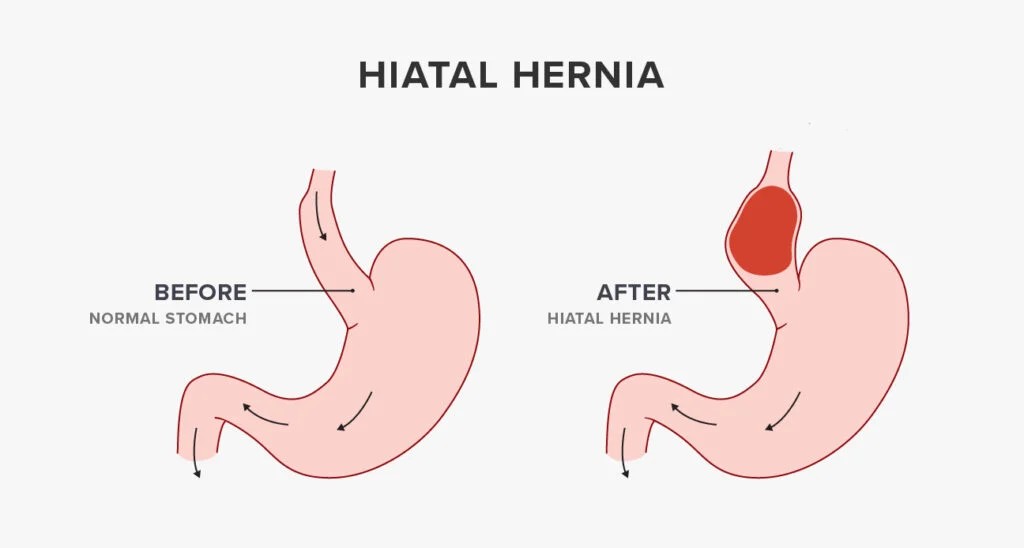
A hiatus hernia is a condition in which part of the stomach moves upward into the chest through an opening in the diaphragm called the hiatus. This can cause symptoms such as heartburn, acid reflux, chest discomfort, and difficulty swallowing. When lifestyle changes and medications fail to control symptoms, Laparoscopic Hiatus Hernia Surgery offers a safe and effective long-term solution.
This article explains everything a patient needs to know about laparoscopic hiatus hernia surgery, including causes, symptoms, treatment options, procedure details, recovery, and risks.
What Is a Hiatus Hernia?
A hiatus hernia occurs when the upper part of the stomach bulges through the diaphragm into the chest cavity. The diaphragm normally separates the chest from the abdomen and helps in breathing.
There are two main types:
- Sliding Hiatus Hernia – the most common type, where the stomach and lower esophagus slide up into the chest.
- Paraesophageal Hiatus Hernia – a less common but more serious type, where part of the stomach pushes beside the esophagus and may become trapped.
Causes and Risk Factors
Hiatus hernia may develop due to:
- Weakening of the diaphragm muscles
- Aging
- Obesity
- Pregnancy
- Chronic coughing
- Heavy lifting or straining
- Injury to the diaphragm
- Genetic predisposition
Symptoms of Hiatus Hernia
Symptoms vary in severity and may include:
- Persistent heartburn
- Acid reflux or regurgitation
- Chest pain or discomfort
- Difficulty swallowing
- Chronic cough or hoarseness
- Bloating and early fullness
- Nausea or vomiting
Large paraesophageal hernias may cause severe pain and breathing difficulty and require urgent treatment.
When Is Surgery Required?
Surgery is recommended when:
- Symptoms persist despite medication
- Severe gastroesophageal reflux disease (GERD) is present
- Complications like esophagitis or strictures occur
- Paraesophageal hernia is diagnosed
- Quality of life is significantly affected
What Is Laparoscopic Hiatus Hernia Surgery?
Laparoscopic hiatus hernia repair is a minimally invasive procedure performed using small incisions, a camera (laparoscope), and specialized surgical instruments. The surgery involves pulling the stomach back into the abdomen, tightening the diaphragm opening, and usually performing an anti-reflux procedure such as fundoplication.
Benefits of Laparoscopic Hiatus Hernia Surgery
Compared to open surgery, laparoscopic repair offers:
- Small incisions with minimal scarring
- Less postoperative pain
- Shorter hospital stay
- Faster recovery
- Lower risk of infection
- Excellent control of reflux symptoms
Preparation Before Surgery
Before surgery, patients may undergo:
- Blood tests
- Endoscopy
- Barium swallow X-ray
- Esophageal manometry
- CT scan (if required)
- Pre-anesthesia evaluation
Patients are advised to stop smoking and fast for 6–8 hours before surgery.
What Happens During the Procedure?
The surgery is performed under general anesthesia and typically includes:
- Making 4–5 small incisions in the abdomen.
- Inserting a laparoscope to visualize the area.
- Pulling the stomach back into the abdomen.
- Tightening the hiatus opening in the diaphragm.
- Performing fundoplication by wrapping part of the stomach around the lower esophagus to prevent reflux.
- Closing the incisions.
The procedure usually takes 1.5 to 3 hours.
Recovery After Laparoscopic Hiatus Hernia Surgery
Most patients experience a smooth recovery:
- Hospital stay of 1–2 days
- Mild pain or shoulder discomfort for a few days
- Gradual return to normal activities in 1–2 weeks
- Special soft or liquid diet for a few weeks
- Return to work within 2–3 weeks
Heavy lifting should be avoided for at least 4–6 weeks.
Possible Risks and Complications
While the surgery is safe, possible risks include:
- Bleeding
- Infection
- Difficulty swallowing (temporary)
- Gas bloating
- Recurrence of hernia
- Injury to nearby organs
These risks are uncommon when the surgery is performed by an experienced surgeon.
Life After Hiatus Hernia Surgery
Most patients experience significant relief from reflux symptoms and improved quality of life. Long-term lifestyle changes such as healthy eating, weight management, and avoiding heavy strain help maintain surgical results.
When to Consult a Doctor
Contact Us if you notice:
- Persistent difficulty swallowing
- Severe chest or abdominal pain
- Fever or signs of infection
- Vomiting or inability to eat