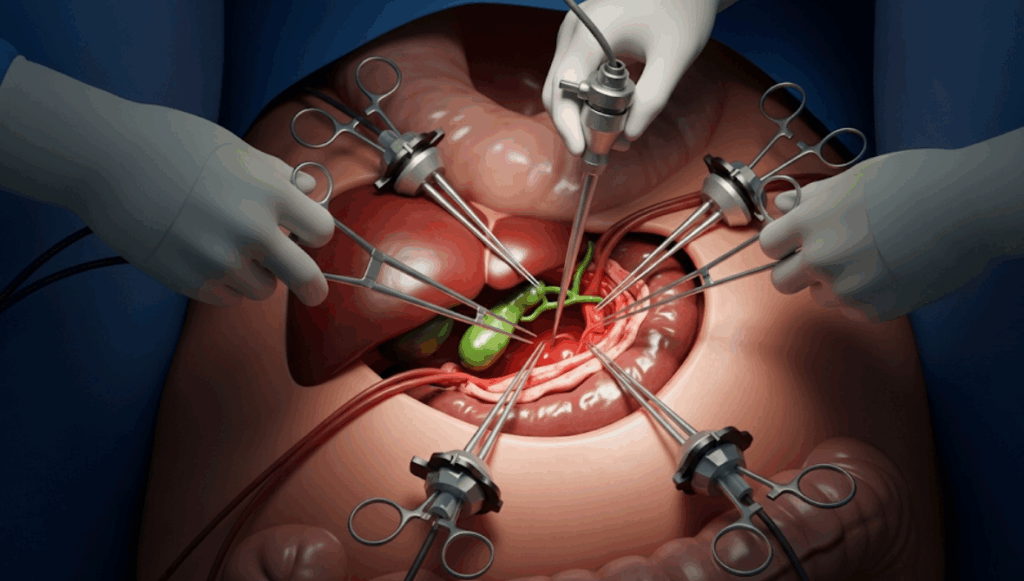
Navigating Challenges in Cholecystectomy: A Surgeon's Perspective
As surgeons, we often encounter complex cases that test our skills and judgment. A recent assessment highlights the importance of being prepared for challenging cholecystectomies, particularly in patients with obesity, cirrhosis of the liver, high ASA scores, or previous abdominal surgeries.
Key Considerations
- Obesity: Adds complexity to the procedure, requiring careful planning and execution. Large liver causes difficulty in dissection and one has to be ready to put extra ports.
- Cirrhosis of the liver: Demands a deep understanding of liver anatomy and potential bleeding risks. Bipolar Maryland forceps is very helpful.
- High ASA score: Indicates a higher risk of complications, necessitating meticulous perioperative care and requires operating at low carboperitoneum often.
- Previous abdominal surgeries: Requires careful dissection and identification of anatomical structures. Adhesiolysis and preventing injuries is the key here.
The Importance of Surgical Expertise
In such challenging cases, it's crucial for operating surgeons to be well-versed in advanced techniques and strategies. A thorough understanding of laparoscopic and open surgical approaches, as well as the ability to adapt to unexpected situations and bail out techniques like subtotal cholecystectomy, is essential for optimal outcomes.
Let's Discuss
- How do you approach complex cholecystectomies?
- What strategies do you employ to ensure patient safety and optimal outcomes?